Enhanced support with feeding your newborn
We hold the ‘Baby-Friendly Hospital’ accreditation.
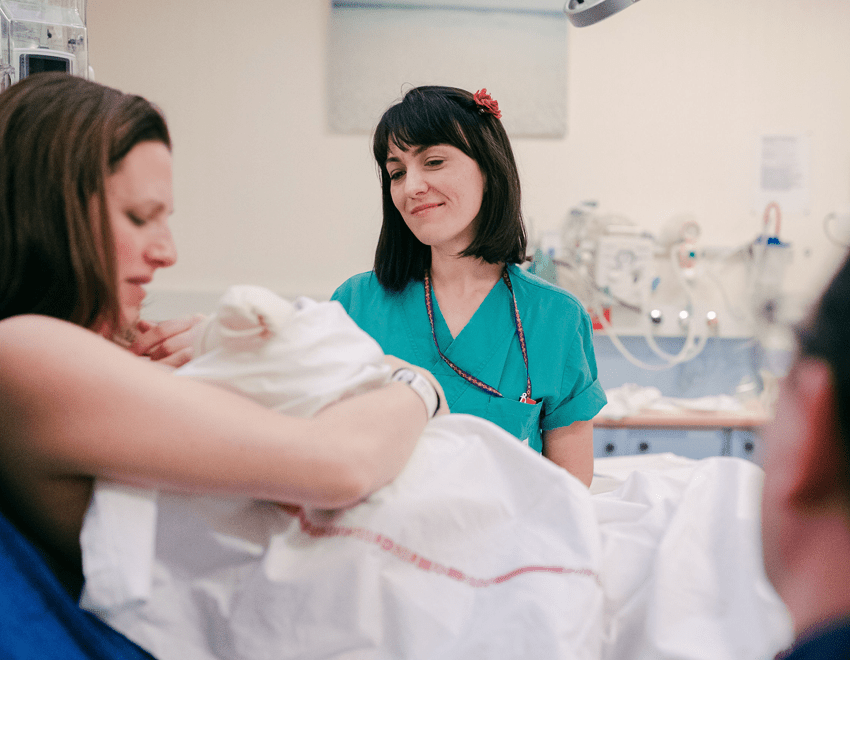
Among other things, this means that our maternity unit offers its little patients and their mums the support they need to establish the best possible feeding routine for their newborn, whether through breast milk or formula.
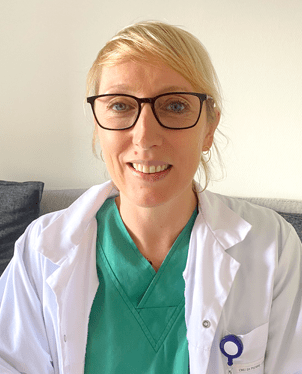
That is why a team of midwives specialising in newborn feeding (IBCLC-certified consultants) has been set up and is at your service both before and after the birth of your child, either in consultation or in the maternity ward during your stay.
When should you book an appointment with a lactation consultant?
During pregnancy: It is beneficial to start thinking about breastfeeding now, especially if the expectant mother has had breast surgery, a history of breastfeeding difficulties, is expecting twins, has inverted nipples (also known as flat nipples), has questions about how to feed the newborn (breast or formula), or has doubts or fears…
After the birth: We support you throughout your breastfeeding journey, tailored to your needs and questions, right up until your baby is one year old. The most common concerns relate to breast pain, milk production, the newborn’s sleep patterns, weaning, and issues with a tight tongue-tie…
We welcome you with kindness and respect for your choices.
Appointments
T. +32(0)2 535 47 13
Pour prendre contact avec l’équipe de consultantes en allaitement :
Email : consultante_lactation@stpierre-bru.be
Twelve conditions for successful breastfeeding
Our policy is based on the BFHI (Baby-Friendly Hospital Initiative) philosophy, jointly supported by UNICEF and the WHO, which sets out the 12 conditions for successful breastfeeding:
- Adopt a written breastfeeding policy and ensure that all healthcare staff are systematically made aware of it.
- Provide all healthcare staff with the necessary training and skills to implement this policy.
- Inform all pregnant women about the benefits of breastfeeding and how to practise it.
- Place newborns in skin-to-skin contact with their mothers immediately after birth and for at least one hour; encourage mothers to recognise when their baby is ready to feed, and offer assistance if necessary.
- Show mothers how to breastfeed and how to maintain lactation even if they are separated from their infant.
- Do not give newborns any food or drink other than breast milk, unless medically advised.
- Keep the baby with its mother 24 hours a day.
- Encourage breastfeeding whenever the baby shows signs of wanting to feed.
- Do not give breastfed babies any artificial teats or dummies.
- Encourage the formation of breastfeeding support groups and refer mothers to them as soon as they are discharged from the hospital or the clinic.
- Protect families from commercial pressures by adhering to the International Code of Marketing of Breast-milk Substitutes.
- During labour and delivery, adopt practises that promote the mother-child bond and a successful start to breastfeeding.
Our policy regarding support in the delivery room is based on respect for the body’s natural processes.
More medicalised interventions during labour, delivery and the baby’s arrival are reserved for situations where they are necessary and will be explained to the parents.