
Our department provides care across the full spectrum of cardiac surgery, including coronary, valvular, aortic and cardiac rhythm procedures. We use state-of-the-art technology, with a strong focus on minimally invasive techniques, and have extensive expertise in robot-assisted and beating-heart surgery.
Each patient benefits from a personalised care plan, discussed within a multidisciplinary setting involving the Cardiology, Anaesthesia and Intensive Care teams.
The Cardiac Surgery team consists of three senior surgeons who oversee the pre-operative, intra-operative and post-operative care of each patient.
Coronary Artery Bypass Surgery
Coronary artery bypass surgery involves revascularising the heart’s arteries using grafts created from arteries (internal mammary or radial) or veins
At CHU Saint-Pierre, 80% of bypass procedures are performed using both mammary arteries, in order to achieve the best possible long-term outcomes. This surgery is traditionally performed via median sternotomy. Bypass procedures can be carried out with the heart stopped using cardiopulmonary bypass (on-pump technique) or with the heart beating (off-pump technique).
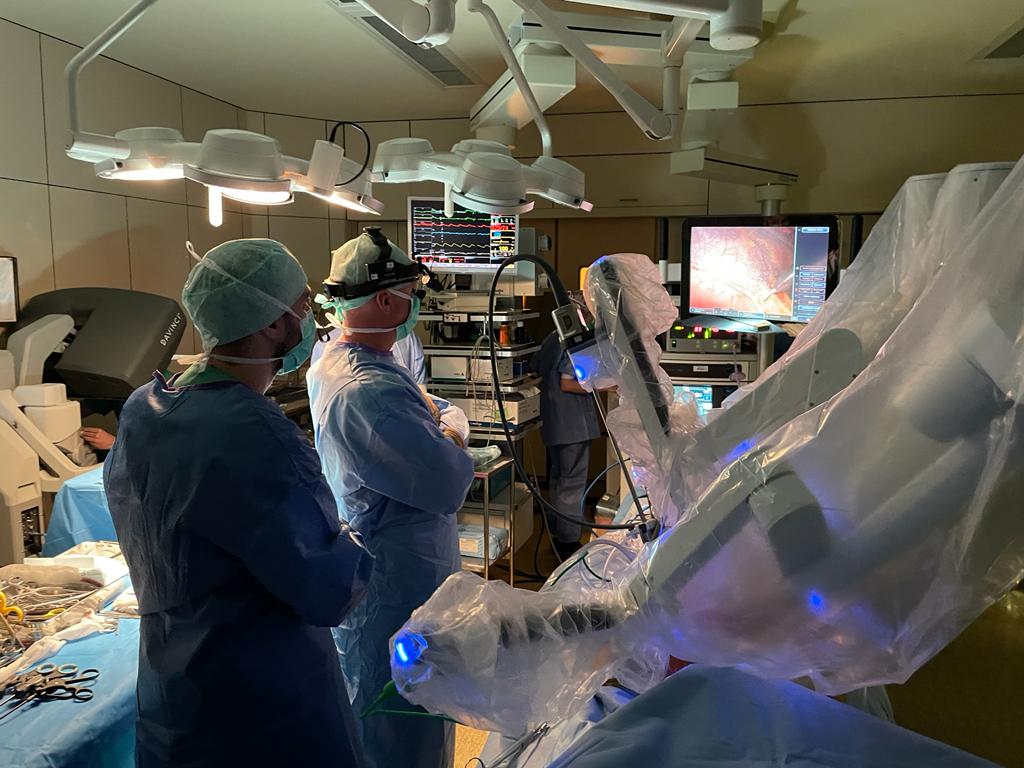
We also perform minimally invasive coronary bypass surgery using the Da Vinci robot. This innovative approach allows bypass surgery to be performed through three small incisions between the ribs. It is carried out on a beating heart and enables faster recovery while maintaining excellent long-term results.
Valve Surgery
Valve surgery involves the repair or replacement of one or more defective heart valves.
In cases of valve insufficiency or regurgitation, repair is often possible and provides the valve with excellent long-term outcomes. This approach avoids the need for long-term anticoagulation and ensures optimal haemodynamic performance in the short term.
In cases of valve stenosis (narrowing), replacement is often required using an artificial prosthesis. Two types of prostheses are available: mechanical prostheses, made from highly durable synthetic materials, resistant to wear and tear, and biological prostheses or bio prostheses, made from animal tissue (bovine pericardium or porcine aortic valve).
Each option has its advantages and disadvantages, and the choice is made on an individual basis with each patient.
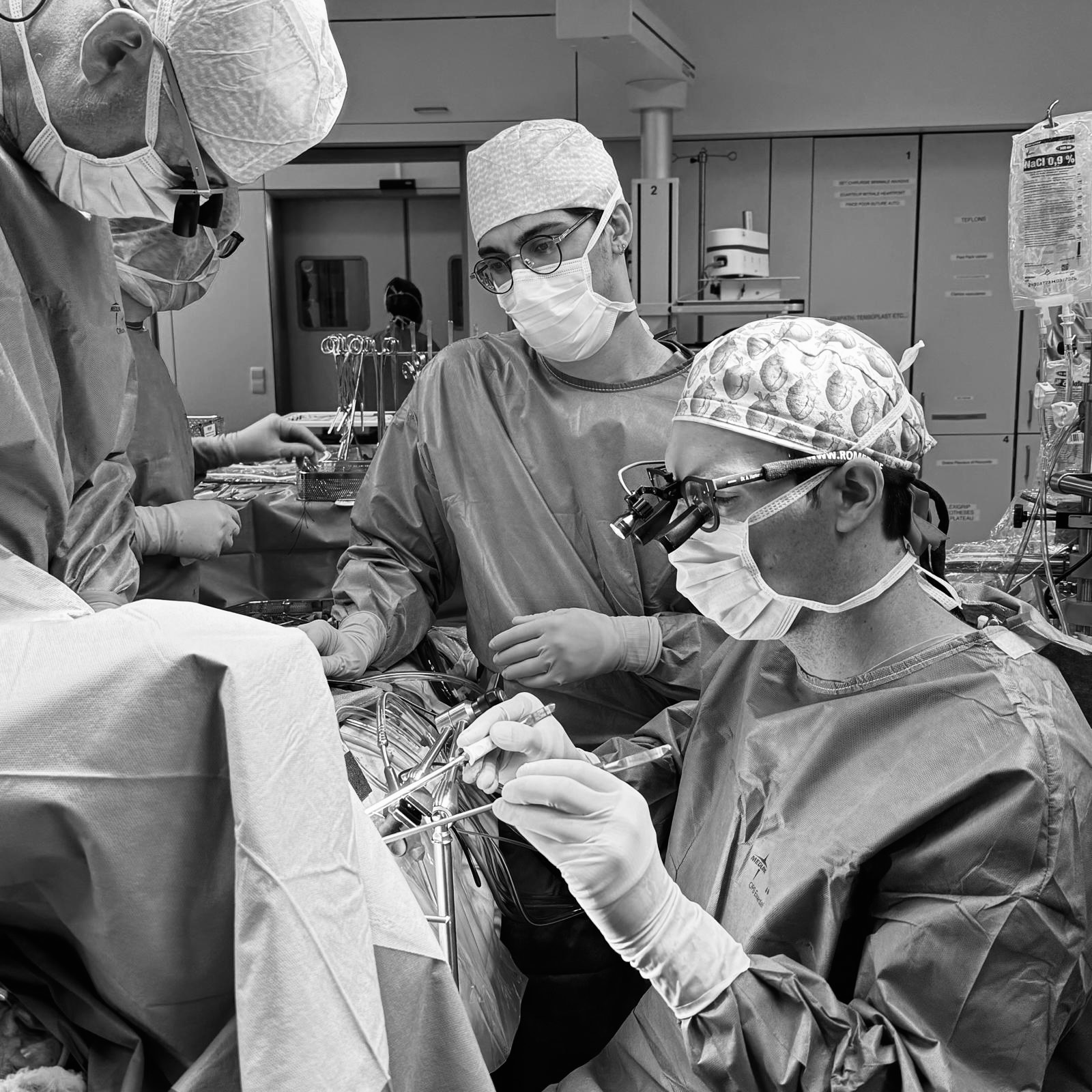
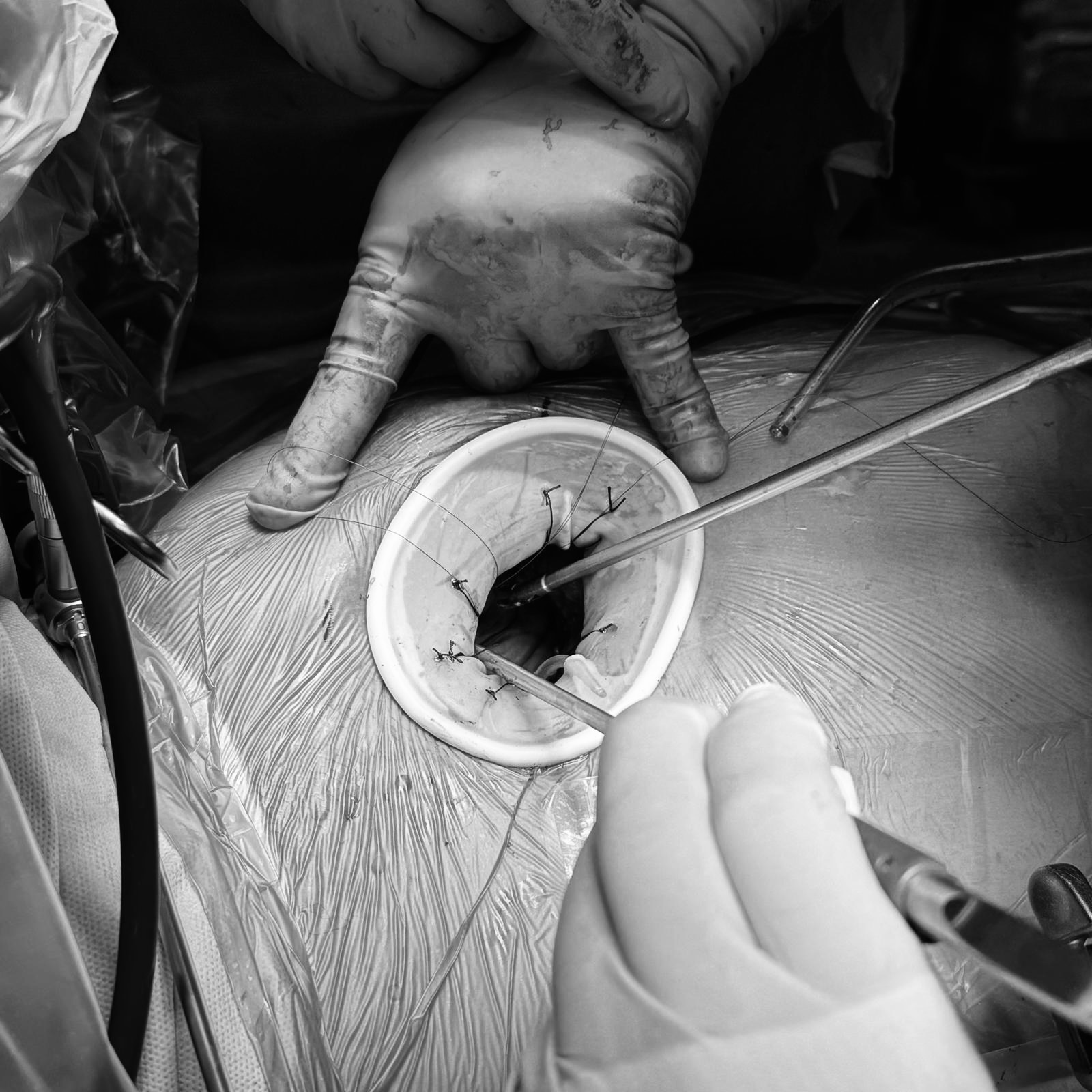
Valve surgery may also be performed using minimally invasive techniques, provided there are no contraindications. A small 5 cm incision is made in the armpit for the repair or replacement of the mitral and tricuspid valves. In the case of aortic valve surgery, a small incision is made at the upper part of the sternum (mini sternotomy).
Thoracic Aortic Surgery
Thoracic aortic surgery mainly concerns aneurysms (pathological dilation of a segment of the aorta) or aortic dissections (a tear in the aorta requiring urgent treatment). The procedure involves replacing the diseased section of the aorta with a synthetic graft.
These procedures vary and may also involve the aortic valve. In many cases, it is possible to preserve and reimplant the native valve within the new synthetic aorta. This is known as the Tirone-David procedure, which is particularly beneficial for young patients, offering them an excellent long-term quality of life.
Cardiac Rhythm Surgery
Cardiac rhythm surgery includes pacemaker implantation, as well as the treatment of atrial fibrillation.
Pacemaker implantation is required when the heart’s conduction system, responsible for transmitting electrical signals between the atria and ventricles, is impaired. This can lead to a slow or irregular heart rhythm, sometimes causing fainting (syncope).
The procedure is performed under local anaesthesia and typically requires only an overnight hospital stay.
Treatment of atrial fibrillation may be performed during valve or coronary heart surgery. It can also be carried out (using a local puncture in the skin) by inserting a catheter into the heart’s arteries (cardiac catheterisation).